20 min read


Login Or Join Our Family & Manage Your Membership In Box Above
Search For Any Herb - Spice Or
Recipe In Box Above

Search For Any Herb Or Spice And
And Recipe In Box Below.
You CAN SEARCH BY SIMPLE KEY WORD ie. Greek, Italian, Pork, Beef.
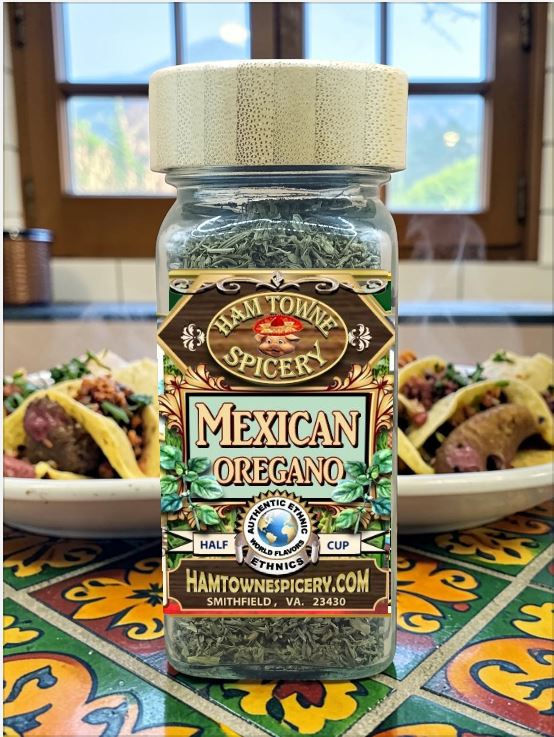
🌿✨ Ingredient Insight
Mexican oregano (Lippia graveolens) grows where the sun is relentless and the soil runs dry—conditions that concentrate its citrus‑bright oils and rugged herbal depth. Though it shares a name with Mediterranean oregano, it’s a completely different plant, shaped by desert winds, volcanic earth, and the cooking traditions of the borderlands.
🍋🌶️ Flavor Note
A lively burst of lemon and lime leads the way, followed by warm, resinous herbal tones and a subtle peppery hum. It’s brighter, wilder, and more expressive than its Mediterranean namesake—built for dishes that carry heat, smoke, and soul.
🍲🔥 In the KitchenMexican oregano is a cornerstone of Tex‑Mex and regional Mexican cooking. It deepens pots of beans, enriches chile sauces, and brings backbone to carnitas, pozole, birria, and long‑simmered stews. It lifts tomato dishes, balances spicy salsas, and adds character to grilled vegetables and marinades. A pinch is enough to wake up tacos; a full teaspoon can anchor a pot of slow‑cooked pintos.
🧂🤲 Practical TipCrumble the leaves between your fingers as you add them—this releases their citrus‑herbal oils and gives your dish a brighter, more aromatic finish. Add early for depth, then finish with a small sprinkle for a fresh top note.
🐪📜 History & Traditional UseFor centuries, Mexican oregano traveled along Indigenous trade routes, prized for its bold aroma and its natural harmony with dried chiles, corn‑based dishes, and clay‑pot stews. As Indigenous and Spanish foodways intertwined, the herb became a defining flavor of the region—woven into dishes that speak of desert landscapes, communal cooking, and the enduring traditions of the Southwest and Mexico.
— A Culinary Deep Dive
Two Herbs, Two Lineages
Though they share a name, Mexican oregano and common Mediterranean oregano come from entirely different botanical families, and that divergence shows up immediately in the kitchen. Mediterranean oregano (Origanum vulgare) is a mint‑family herb shaped by the mild climates of the Mediterranean basin. Mexican oregano (Lippia graveolens), from the verbena family, grows in sun‑blasted, mineral‑rich soils of Mexico and the American Southwest. These origins give each herb a distinct personality — one familiar and savory, the other bright, wild, and built for bolder cooking.
🍋🌶️ Flavor: Bright vs. Earthy
Mediterranean oregano leans warm, woody, and gently bitter, with a steady herbal depth that melts seamlessly into tomato sauces, roasted vegetables, and olive‑oil‑forward dishes. It’s the oregano of pizza, Greek marinades, and Italian red sauce — comforting, mellow, and rounded. Mexican oregano, by contrast, opens with a citrus‑forward snap reminiscent of lime peel and lemon verbena. Beneath that brightness lies a rustic herbal backbone and a faint peppery hum. It’s more vivid, more aromatic, and more expressive — a flavor built to stand up to chiles, smoke, and long simmering.
🍲🔥 How They Behave in the Pot
Mediterranean oregano softens under heat, blending into the background as a supporting note. It enriches but rarely leads. Mexican oregano behaves differently: even after long cooking, it keeps a trace of its citrus edge, giving dishes both depth and lift.
In chile sauces, it threads brightness through layers of dried peppers. In beans, it keeps richness from feeling heavy. In carnitas, birria, pozole, and Tex‑Mex stews, it provides the herbal structure that ties together fat, heat, and smoke.
🧂🤲 Why Cooks Reach for Mexican Oregano
Mexican oregano isn’t a substitute for Mediterranean oregano — it’s a different tool entirely. When a dish carries chiles, acidity, smoke, or slow‑cooked richness, Mexican oregano is the herb that can keep up. Its citrus‑green top notes cut through dense flavors, while its earthy backbone anchors the dish. Crumbling the leaves between your fingers releases even more aromatic brightness, letting you decide how boldly it speaks.
📜 The Culinary Reasoning
Use Mexican oregano when you want a dish to feel alive — when you need clarity inside complexity. It doesn’t mimic Mediterranean oregano; it brings its own voice, one shaped by desert landscapes and chile‑driven cooking traditions. In the right dish, it’s not just the better choice — it’s the only choice that makes the food taste complete.


Herbie's Homemaker's School Of Culinary Arts
Feature Recipes... Click to explore our huge recipe Library